Wearable health technology: how to use it to understand your health
What smartwatches and fitness trackers can and cannot measure, how accurate they are, how to use them sensibly, and three examples at different budgets.
- Published by
- Tibacare Admin
- How this was made
- Drafted with AI assistance. Checked against its sources and approved for publication by Tibacare.
- Published
- Reading time
- About 7 minutes (estimate)
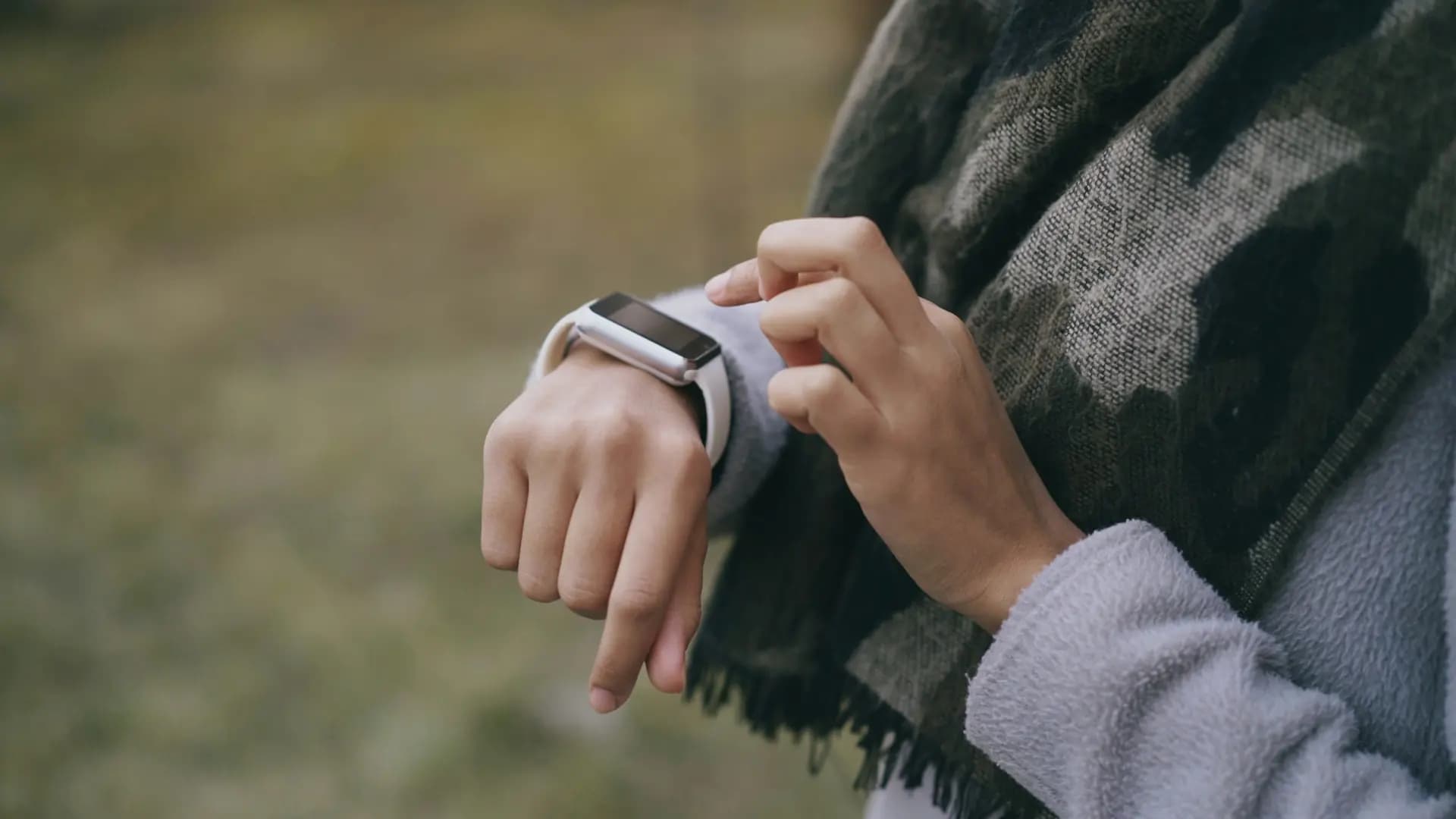
Smartwatches and fitness trackers have become an everyday way to keep an eye on activity, sleep and other habits. Used well, they can help you notice patterns and stay motivated.
You do not need an expensive device to benefit. Paying attention to how active you are, how you sleep and how you feel can start with a simple tracker, your phone or a notebook.
What can wearables measure?
It helps to separate what a device measures from what it estimates.
- Steps: counted from a motion sensor.
- Heart rate: read by a light-based sensor that detects blood flow under the skin.
- Exercise: many devices recognise workouts, and those with GPS track distance and pace.
- Sleep: estimated from movement and heart rate, not measured from brain activity as in a sleep laboratory.
- Calories: estimated from your movement, heart rate and personal details.
- Recovery and stress scores: each manufacturer’s own calculation, often using heart rate variability (the small changes in time between heartbeats).
- ECG and blood oxygen: some models can record a simple electrocardiogram (ECG) or estimate blood oxygen, in countries where these features are supported.
Steps, heart rate and GPS distance are measured fairly directly. Calories, sleep stages and wellness scores are produced by algorithms, so they carry more uncertainty.
How has accuracy improved?
Early trackers relied mainly on a motion sensor. Today’s devices combine several sensors with smarter data processing, including machine learning. A 2026 review of 47 studies found that accuracy has improved substantially, thanks to better optical sensors, better filtering of movement “noise” and better motion detection.
Step counts are now typically within about 5% for steady walking. Calorie estimates improved least, with errors of roughly 10% to 40%. Wearing a device over weeks also makes your own trends easier to see.
The evidence is still patchy: a large review found that only about one in ten consumer wearables had been tested for even one measurement. Results for one model do not apply automatically to another.
What should you trust?
As a rough guide, based on independent research:
- Heart rate is usually the most reliable of these, with an average difference of about 3% from reference measurements, such as an ECG or chest strap, in one large review. A loose fit or fast-changing exercise can reduce accuracy.
- Steps are usually reasonable for walking, but less reliable for other activities.
- Sleep duration helps show patterns, but devices tend to overestimate how long you slept.
- Sleep stages (light, deep and REM sleep) need caution: studies have found stage estimates inconsistent, and devices tend to be less accurate on nights of disturbed sleep.
- Calories burned are a rough estimate, and errors can be large.
- Wellness scores, such as readiness or stress, are calculated differently by each company and few have been independently tested. Treat them as prompts, not measurements.
- Blood oxygen readings from the wrist need caution. In studies of one smartwatch, readings differed from standard pulse oximeters by about 2 percentage points on average, and single readings by up to about 6 points.
- Heart-rhythm notifications and ECG features are available on some models, in countries where they are cleared. A notification is a reason to speak to a health professional, not a diagnosis.
Blood pressure readings from devices without a cuff need particular caution. In September 2025, the US Food and Drug Administration warned against smartwatch and smart-ring blood pressure features it has not authorised, because inaccurate readings can lead to missed or wrong diagnosis and treatment. If you need to check your blood pressure, ask a health professional which kind of monitor to use.
No consumer wearable replaces diagnostic medical equipment or an assessment by a health professional, and a normal reading does not rule out a health problem.
What your wearable can, and cannot, tell you
Useful for understanding trends
- Steps and activity, especially walking
- Heart-rate patterns, usually the most reliable measure
- Sleep duration patterns, though devices tend to overestimate sleep
- Wellness scores, as prompts rather than measurements
Important limitations
- Calorie estimates are rough, and errors can be large
- Sleep stages are estimates, and less accurate on nights of disturbed sleep
- ECG and other features depend on the model and the country
- A wearable does not replace an assessment by a health professional
Using wearables in daily life
- Learn your normal. Over a few weeks, see your usual activity, sleep and resting heart rate.
- Look at trends, not single days. Weekly patterns say more than one night’s score.
- Build realistic habits. Small, steady increases in activity are easier to keep up than big jumps. Set goals that suit you.
- Use reminders lightly. Movement or bedtime reminders can help, but switch off alerts you ignore or that make you anxious.
- Notice how you feel. If a wellness score disagrees with how you feel, give weight to how you feel, but do not ignore a health alert. If tracking becomes stressful, take a break.
- Prepare questions for a clinician. For a health concern, a summary of trends, such as resting heart rate over weeks, can support the conversation.
- Protect your information. Check what the app collects and shares, review connected-app permissions, and learn how to download or delete your data.
Three wearables at different budgets
The devices mentioned are independent examples for comparison, not personalised recommendations. These examples are not sponsored, and Tibacare receives no payment, commission or other benefit for featuring them. Tibacare does not sell these devices or receive information collected by them. Prices, availability and supported features may vary by country.
Prices are indicative US dollar guides from each manufacturer’s US website, checked on 24 October 2026. Taxes, import duties and delivery can add to the cost.
Three examples at a glance
Premium
Garmin Venu 4
Indicative range $500 to $600
A smartwatch for activity, sleep and health trends, from $549.99 (some versions $599.99). Battery life is up to 10 or 12 days in smartwatch mode, depending on size, and it works with iPhone and Android through the Garmin Connect app.
Features include heart-rate and sleep tracking, a feature that flags when overnight readings move away from your usual range, and habit logging. Its ECG and blood-oxygen features are not available in every country.
Official manufacturer website: Garmin Venu 4 (opens in a new tab)
Everyday
Fitbit Charge 6
Indicative range $120 to $170
A slim, easy-to-use band for everyday activity, sleep and heart-rate trends, at $159.95, with battery life of up to 7 days.
It needs the Google Health app, a Google Account, internet access and a compatible phone (check Google’s current requirements before buying). Some features need a paid Google Health Premium subscription after an included trial. ECG and irregular-rhythm notifications are only available in some countries.
Official manufacturer website: Fitbit Charge 6 (opens in a new tab)
Budget
Amazfit Bip 6
Indicative range $70 to $90
A lower-cost smartwatch with built-in GPS and battery life of up to 14 days, at $79.99. It tracks activity, sleep and heart rate through the free Zepp app, on Android 7.0 or later or iOS 14.0 or later. Amazfit describes the Zepp app as free, and says the watch and app are not medical devices.
Official manufacturer website: Amazfit Bip 6 (opens in a new tab)
What to consider before buying
- What you want to track: for steps and sleep, a simpler device may be enough. A higher price does not guarantee more accurate measurements.
- Your phone: check the device works with your phone and its software version.
- Battery: longer battery life means fewer gaps, especially overnight.
- Where you live: not every model or feature is sold or supported in every country.
- Data and internet: most devices need an app, an account and regular syncing.
- Subscriptions: check whether the features you want cost extra.
- Ease of use: screen and text size, buttons, and how easy the strap is to fasten.
- Privacy: how your data is stored and shared, and whether you can export or delete it.
- Support: whether warranty, repairs and help are available where you live.
The bottom line
Wearables can make everyday habits more visible. Treat their numbers as guides rather than verdicts, and look at trends over time. If you have symptoms or concerns, talk to a health professional rather than relying on a device score.
Sources
- Advancement in wrist worn physical activity trackers: technological developments and measurement accuracy: a systematic review (Hogue et al., 21 August 2026) — Frontiers in Digital Health (pubmed.ncbi.nlm.nih.gov). Accessed 24 October 2026.
- Keeping Pace with Wearables: A Living Umbrella Review of Systematic Reviews Evaluating the Accuracy of Consumer Wearable Technologies in Health Measurement (Doherty et al., 2024) — Sports Medicine (pubmed.ncbi.nlm.nih.gov). Accessed 24 October 2026.
- Performance of seven consumer sleep-tracking devices compared with polysomnography (Chinoy et al., 2021) — Sleep (pubmed.ncbi.nlm.nih.gov). Accessed 24 October 2026.
- Do Not Use Unauthorized Devices for Measuring Blood Pressure: FDA Safety Communication (16 September 2025) — US Food and Drug Administration (fda.gov). Accessed 24 October 2026.
- Take steps towards a healthier lifestyle with the Venu 4 from Garmin (press release, 17 September 2025) — Garmin (garmin.com). Accessed 24 October 2026.
- Garmin Venu 4 (US product page: price, battery life, regional feature notes) — Garmin (garmin.com). Accessed 24 October 2026.
- Fitbit Charge 6 technical specifications (Google Store, US) — Google (store.google.com). Accessed 24 October 2026.
- Amazfit Bip 6 (US product page) — Amazfit (Zepp Health) (us.amazfit.com). Accessed 24 October 2026.
General information
This article is for general health and lifestyle information only. It is not medical advice, diagnosis or treatment. For personal health concerns, speak with a qualified healthcare professional.